


 Cart
Cart
 sales@molnova.com



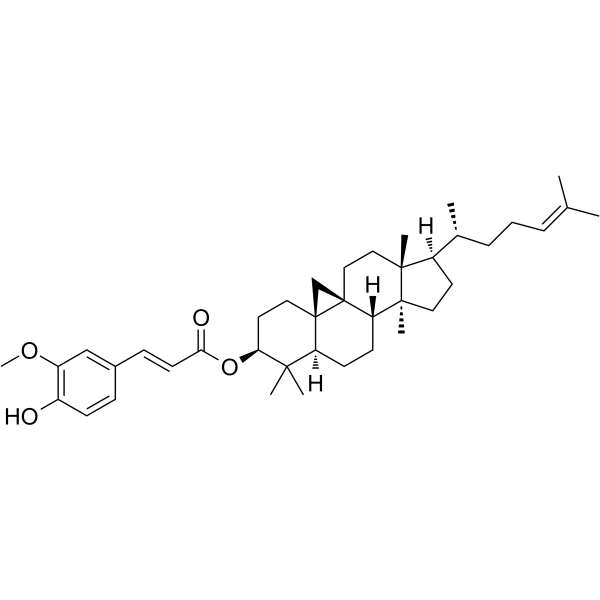
Cycloartenyl ferulate
CAS No. 21238-33-5
Cycloartenyl ferulate( —— )
Catalog No. M32245 CAS No. 21238-33-5
Cycloartenyl ferulate (also known as cycloartenol ferulate) is a representative triterpene alcohol with diverse biological properties, such as antioxidant, anti-allergic, anti-inflammatory, and anticancer activities.
Purity : >98% (HPLC)
 COA
Datasheet
HNMR
HPLC
MSDS
Handing Instructions
COA
Datasheet
HNMR
HPLC
MSDS
Handing Instructions
| Size | Price / USD | Stock | Quantity |
| 5MG | 419 | In Stock |


|
| 50MG | Get Quote | In Stock |
|
| 100MG | Get Quote | In Stock |
|
Biological Information
-
Product NameCycloartenyl ferulate
-
NoteResearch use only, not for human use.
-
Brief DescriptionCycloartenyl ferulate (also known as cycloartenol ferulate) is a representative triterpene alcohol with diverse biological properties, such as antioxidant, anti-allergic, anti-inflammatory, and anticancer activities.
-
DescriptionCycloartenyl ferulate (also known as cycloartenol ferulate) is a representative triterpene alcohol with diverse biological properties, such as antioxidant, anti-allergic, anti-inflammatory, and anticancer activities.
-
In Vitro——
-
In Vivo——
-
Synonyms——
-
PathwayOthers
-
TargetOther Targets
-
Recptor——
-
Research Area——
-
Indication——
Chemical Information
-
CAS Number21238-33-5
-
Formula Weight602.89
-
Molecular FormulaC40H58O4
-
Purity>98% (HPLC)
-
Solubility——
-
SMILES——
-
Chemical Name——
Shipping & Storage Information
-
Storage(-20℃)
-
ShippingWith Ice Pack
-
Stability≥ 2 years
Reference
molnova catalog



related products
-
Phenol Red
Red dye, pH indicator, and diagnostic aid for determination of renal function. It is used also for studies of the gastrointestinal and other systems.
-
Hosenkoside K
Hosenkoside K is a baccharane glycoside isolated from the seeds of impatiens balsamina.
-
Neurotensin(8-13) 3T...
Neurotensin(8-13)(3TFA) is?Neurotensin (NT)?fragment, Neurotensin(8-13) results in a decrease in cell-surface NT1 receptors (NTR1) density.The internalization of the receptor induced by neurotensin (8-13) leads to a decrease in the density of the NT1 receptor (NTR1) on the cell surface.
